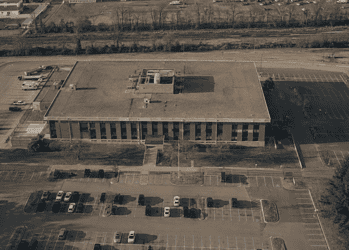


When a pipe bursts in a hospital, no one describes it as a plumbing policy problem. When a hospital generator fails during a storm, no one calls it an energy ideology debate. Infrastructure is simply expected to work, and when it doesn’t, the consequences arrive as patients without power and surgical theatres without light.
The pharmaceutical supply chain is infrastructure. It has been treated, for the better part of three decades, as something else — as a market, as a trade relationship, as a matter of procurement optimization. That misclassification is now producing consequences that, in retrospect, look exactly as predictable as a burst pipe that was never inspected.
The 90-day US-China trade truce announced in May 2026 eased immediate tariff pressure and was received in markets with the relief usually reserved for a ceasefire between proximate belligerents. The pharmaceutical sector exhaled. What the truce did not do — what it could not do, structurally — was alter the underlying exposure that the prior months of tariff escalation had made visible. That exposure is precise, well-documented, and has now been described under oath to a Congressional committee: roughly a quarter of the generic drug unit volume sold in the United States contains active pharmaceutical ingredients that originate, directly or indirectly, from Chinese manufacturers.
That fraction — around 25 percent by daily dosage, according to Brookings economist Marta Wosińska in March 2026 testimony — is less alarming-sounding than the more widely circulated claim that China supplies “80 percent of US generic drugs,” which conflates finished-dose form production with the upstream chemical synthesis where Chinese dominance is most concentrated. The correct number is, in some respects, more troubling than the inflated one. It is less available for dismissal as hype, and it describes a structural condition rather than a headline figure: a slow, deliberate expansion of Chinese pharmaceutical chemistry into the American drug supply that, as Wosińska noted, “is unlikely to reverse on its own.” The footprint has grown because it was economical for it to grow. It will not shrink because it has become diplomatically inconvenient.
Beijing controls 40 percent of imported drug ingredients and holds monopolies on essential medicines. Those monopolies are not political accidents. They are the downstream result of decades of pharmaceutical offshoring in which the organizing principle was cost, not security. The US pharmaceutical industry located active ingredient production in China and India for the same reason it located shirt manufacturing there: labour costs, regulatory arbitrage, and the sustained belief that globalisation had made geopolitical disruption someone else’s problem. That belief was serviceable until it wasn’t. It stopped being serviceable during the COVID-19 pandemic, when export restrictions by multiple countries — including China — on medical supplies created the first legible version of what pharmaceutical infrastructure failure actually looks like when it runs. The lesson was absorbed in language: “supply chain resilience” entered every annual report, every Congressional hearing, every pharmaceutical strategy document. It was absorbed less thoroughly in practice. Atlantic Council
API cost increases of 12 to 20 percent were reported by several firms on widely used molecules such as amoxicillin, acetaminophen, and metformin as tariff pressures mounted in 2025. A 25 percent tariff on pharmaceutical imports, according to analysis of the tariff escalation scenario, could increase annual US drug costs by nearly 51 billion dollars, with price hikes of up to 12.9 percent if passed to consumers — hitting most severely the high-cost specialty drugs used in cancer and diabetes treatment. These are not projections about future drugs. They are projections about drugs that Americans are currently taking. ZS
The category specificity of the exposure matters for how it should be understood. Generic drugs constitute roughly 90 percent of US prescriptions by volume. China supplies a large share of key starting materials, intermediates, and active pharmaceutical ingredients used in investigational drugs, and with new tariffs and Chinese export controls on these critical materials, US sponsors are facing longer lead times, higher prices, and uncertain availability. Small biotech firms, which operate on thin margins and depend on just-in-time procurement, face the most acute near-term exposure. But the long-run concern sits in a different category: the drugs most at risk of weaponisable disruption are not necessarily the ones on clinical-essential lists. They are the drugs with the highest patient reach — the drugs so widely used that their scarcity would produce immediate, visible, politically intolerable harm. Syner-G BioPharma
For weaponization, the most tempting targets are not necessarily the drugs at the top of clinical-essential lists, but products with very high patient reach that leave the most people exposed when supply is interrupted. This is a different risk calculus than shortage risk. Shortage risk is probabilistic and accidental. Weaponisation risk is strategic and deliberate. The distinction matters for how policymakers should think about it — and, crucially, for how long-horizon capital should price it. Brookings
The obvious response — reshore pharmaceutical manufacturing — is correct as an aspiration and almost entirely unhelpful as a near-term strategy. The US currently lacks sufficient small-batch, GMP-compliant facilities to meet demand. Building out this capacity will take years, causing near-term production bottlenecks. The longer-form version of that assessment, offered by every serious analyst who has studied it, places meaningful reshoring at ten to fifteen years if executed with sustained policy commitment and capital investment. That timeline has not meaningfully shifted in the years since the pandemic made the problem visible. The reason is straightforward: pharmaceutical manufacturing is not factory building. It is chemistry infrastructure — the accumulation of precise, regulated, environmentally controlled production capacity for molecules that cannot be rushed. A semiconductor fab takes three years to build. A viable API production facility for a complex antibiotic requires regulatory approval, validation batches, process chemistry development, workforce training, and a sustained quality system. You cannot surge-capacity your way to pharmaceutical security. Syner-G BioPharma
Since 2020, US pharmaceutical companies have signed 53 billion dollars in licensing deals with Chinese biotech firms. China now supplies roughly a third of new compounds entering the US drug pipeline. This is the less-discussed dimension of the dependency: it is not confined to generic chemistry. It extends upstream, into early-stage research and clinical trial capacity. The question of Chinese API dominance in generics is the question of where the drugs that currently exist are made. The question of Chinese biotech integration is the question of where the drugs that do not yet exist are being developed. Both matter for a comprehensive accounting of pharmaceutical infrastructure risk. Current policy discussion focuses almost entirely on the first. Coalition For A Prosperous America
The Brookings analysis of the USMCA context suggests one structural alternative that avoids the worst of the tariff-price pass-through problem: regional pharmaceutical manufacturing coordination across North America, using the 2026 USMCA review as a mechanism to align US, Canadian, and Mexican capacity. The upcoming 2026 Joint Review of the USMCA provides an opportunity to reexamine these dependencies and to propose cooperative reforms, including the creation of a shared early-warning system for drug shortages modelled on the EU’s Health Emergency Preparedness and Response Authority. This is more tractable than unilateral reshoring and less subject to the cost-inflation dynamics that make tariff-based approaches politically difficult to sustain. It is also, notably, still a decade-scale project. Brookings
What the May 2026 trade truce bought is time. Time for investigation — the Section 232 national security review of pharmaceuticals is ongoing. Time for negotiation — the pharmaceutical sector’s trade relationship with China is not yet resolved into policy. Time for capital allocation decisions about whether to build alternative supply chains before the next episode of geopolitical friction makes the question urgent again. What it did not buy is resolution. The infrastructure problem remains the infrastructure problem. The medicine cabinet is a supply chain, and supply chains require the same unglamorous, sustained, expensive attention to physical capacity that hospitals give to generators and pipes. The alternative is to continue treating it as a market. That approach has now had its full accounting.
Sources
- Brookings Institution: Wosińska, M., “When Medicine Supply Chains Become Weapons,” March 2026 — brookings.edu
- Atlantic Council: “Pharmaceuticals Are China’s Next Trade Weapon,” February 2026 — atlanticcouncil.org
- US-China Economic and Security Review Commission: Chapter 9, Annual Report 2025 — uscc.gov
- ZS Associates: “Navigating Pharma Supply Disruptions and US Policy Shifts,” 2025 — zs.com
- Brookings Institution / USMCA 2026 Review — brookings.edu
- Coalition for a Prosperous America: House Hearing Analysis, March 2026 — prosperousamerica.org