

Five firms — Amazon, Alphabet, Microsoft, Meta, and Oracle — have collectively guided to between six hundred and seven hundred billion dollars of capital expenditure in 2026. This figure is assembled from company earnings calls, SEC filings, and synthesis by research groups tracking hyperscaler infrastructure spend. Epoch AI’s analysis of quarterly capex through the end of 2025 fits an exponential growth model with an annualised rate of 72 per cent since the second quarter of 2023. Capital intensity now sits between roughly 45 and 57 per cent at several of these firms, levels that would once have looked extraordinary for mature businesses. Aggregate hyperscaler capex in 2026 will exceed internal free cash flow, and the gap is being bridged in debt markets.
That is the commitment. Yet it is discussed, in most venues, as a technology story — a wager on a specific hypothesis about model capability. That framing is inadequate. It understates what has actually been committed and it invites the wrong tools to evaluate the decision. Hyperscaler AI capex at this scale is a capital-allocation decision before it is a technology decision.
WHAT IS ACTUALLY BEING COMMITTED
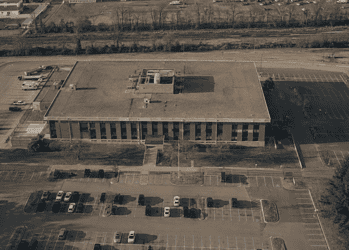
A technology decision, in the ordinary sense, is a choice about which architecture to deploy, which product to ship, or which roadmap to pursue. It is typically reversible within a planning horizon. Teams can be reassigned, codebases deprecated, strategic priorities rewritten. The cost of being wrong is measurable in a revised annual plan. What is being committed here is different. It is physical infrastructure: data centres with useful lives measured in decades, signed contracts for specific megawatts of electricity at specific substations, long-lead semiconductor orders, fibre backbones, and cooling systems.
The second layer of commitment is financial. The gap between hyperscaler capex and internally generated cash is now being closed with debt. This is an unusual posture for firms whose defining characteristic for two decades was excess free cash flow. It is also an unusual cost of capital to deploy into physical assets with a horizon longer than any specific product cycle.
WHY THE FRAMING MATTERS
When a decision is discussed as a technology decision, the questions asked are technology questions. Is capability improving? Is the product working? Is the competitive position defensible? Those are reasonable questions, but they are incomplete for this class of commitment. The relevant questions are allocation questions: over what horizon is the capital committed; what is the cost of capital funding it; what range of returns would make the decision retrospectively defensible; what alternative investments this capital is displacing; and what the balance sheet looks like under a downside case in which AI revenue growth remains positive but falls short of what the buildout appears to imply.
WHAT THE RECORD SAYS ABOUT COMPARABLE COMMITMENTS
Industrial commitments of this relative scale are not unprecedented. Railways in the nineteenth century, telecommunications buildouts in the late nineteenth and late twentieth centuries, and postwar electric-grid expansion all involved concentrated capital deployment at magnitudes comparable, in relative terms, to current hyperscaler spending. None of them was merely a technology decision. All were allocation decisions whose economic verdicts depended less on the intrinsic appeal of the technology than on the cost of capital during the commitment window, the structure of demand that emerged, and the regulatory environment that followed.
The record across those episodes is mixed. Some buildouts produced durable infrastructure that supported decades of later economic activity at declining marginal cost. Others produced a generation of write-downs, consolidation, and salvaged plant. The lesson is not that the present cycle must end one way or the other. It is that the technology case alone has never been enough to adjudicate the outcome of a commitment this large.
WHAT HONEST EVALUATION LOOKS LIKE
Nothing in this argument requires a bullish or bearish view on AI. It does require that the question be asked in the correct register. An institutional investor evaluating exposure to a hyperscaler should be reading the balance sheet as carefully as the product roadmap. A regulator thinking about concentration in data-centre buildout should be thinking about grid capacity and credit-market absorption as carefully as model supply. A treasurer at a firm adjacent to the buildout should be pricing the knock-on effects of capital being drawn toward data-centre construction and away from everywhere else.
The mistake is not optimism or scepticism. The mistake is to answer a question about capital allocation with the vocabulary of a product debate. Seven hundred billion dollars a year is not just a technology story. It is a capital story that happens to be about technology, and the difference will determine which observers were reading the decision and which were merely reading the press release.
PRIMARY SOURCES
- Epoch AI. “Hyperscaler capex has quadrupled since GPT-4’s release.”
- CNBC. “Tech AI spending approaches $700 billion in 2026, cash taking big hit.” 6 February 2026.