
In March 2026, the International Federation of the Phonographic Industry published its annual Global Music Report. Global recorded music revenues, the report disclosed, grew by 6.4 per cent to $31.7 billion in 2025, the eleventh consecutive year of growth. Paid subscription streaming crossed a threshold: for the first time, a single revenue format — paid streaming — accounted for more than half of global recorded music revenue. Inside the headline figure, however, a different and less-discussed fact appeared. Global physical format revenue grew by eight per cent, outpacing digital revenue growth for only the second time on record. Vinyl sales rose almost fourteen per cent, marking the format’s nineteenth consecutive year of growth.
The ordinary reading of the music-industry recovery is that streaming won and everything else is legacy. It is true in one sense and misleading in another. What the data actually show is a bifurcation. Everyday music consumption has migrated decisively to streaming, which is where time is spent and where the economics live. A different mode of consumption — slower, deliberate, oriented toward a specific artefact rather than toward a flow — has persisted, grown modestly in revenue, and increasingly concentrates around a form that was supposed to have died two decades ago. The form is the album.
This piece is about what the album is now, and what has happened to the sixty-year cultural form it used to be. The argument is not that the album is coming back. It is that the album has changed what it is for — and that the thing it is now for is worth looking at closely.
WHAT THE ALBUM WAS
The album, as a primary cultural unit, is almost exactly sixty years old. The long-playing vinyl record had existed since 1948, but for its first fifteen or so years, the LP was mostly a container — a collection of singles pressed together for economic convenience, or a recorded document of a performer’s stage set. The transformation of the LP from container into form happened in a specific span of years in the mid-to-late 1960s, when a succession of records — ‘Rubber Soul’ in 1965, ‘Pet Sounds’ in 1966, ‘Sgt. Pepper’s’ in 1967, ‘Astral Weeks’ in 1968, ‘The Velvet Underground’ in 1969 — established the album as a work. It was longer than a single, shorter than a concert, and ordered. The order mattered. Tracks were sequenced. The whole was intended to be listened to as a whole. Liner notes were part of the object. The cover was part of the object.
Once that shift had happened, it compounded. The seventies built its idea of artistic ambition on the album. The eighties and nineties built their commercial structure on it. By the time the compact disc reached maturity in the 1990s, the album was so fully the default unit of popular music that the single — which had been the primary format of the 1950s — seemed vestigial. The album was where artists had identities; where artists were reviewed; where artists charted; where artists earned. A career was a sequence of albums. A fan’s library was a shelf of albums. Casual listening happened, but it happened in the interstices of a musical economy whose organising unit was the album.
That shape lasted almost exactly thirty years, from roughly 1965 to the commercial peak of the compact disc in the late 1990s. What followed it is the story everyone knows: Napster, the iTunes Store, the iPod, the collapse of recorded-music revenue by more than half between 1999 and 2014, and the arrival of Spotify. By the mid-2010s, the album as a commercial form looked to most observers as though it had been overtaken by events.
WHAT STREAMING DID TO IT
What streaming did to the album is more specific than ‘unbundling’. It would be more accurate to say that streaming moved the default listening unit from the album to the playlist, and from the listener’s choice to the platform’s recommendation. Inside a playlist, the album’s internal architecture — sequencing, tonal progression, intended pacing — is invisible. The tracks arrive as peers of every other track in the flow. The cover is a thumbnail. The liner notes are not accessible. The producer is not credited anywhere the listener will read. The album persists as a metadata category; it does not persist as a form.
The artists and labels adjusted. Release strategies shifted toward frequent singles rather than multi-year album cycles. Album lengths crept upward, in part to maximise playlist presence and per-stream revenue, producing seventy- and eighty-minute records that were not conceived as unified works so much as portfolios of potential singles. Track ordering became less important than the selection of which three tracks would be released as pre-album singles. The rhetoric of the album as a statement persisted; the structural conditions that had made it one weakened.
By the early 2020s, a familiar obituary had been written: the album as a coherent artistic form had not survived the platform transition. What survived was a marketing designation — the word ‘album’ attached to a drop of tracks that might be consumed in any order by any listener on any service. This obituary was not false. It was also, as it turned out, not complete.
The album as everyday form has been unbundled. The album as a considered object — the thing someone buys, holds, plays from start to finish — has quietly become more specific, and more important to its buyers, than it was at the commercial peak of the CD.
WHAT DID NOT HAPPEN
What did not happen is the disappearance of the physical album. The vinyl figures are the easiest evidence; they are also the most surprising, because they run against the expectation that has governed industry thinking for almost thirty years. Vinyl sales have now grown in every year since 2007. In 2025, they grew by almost fourteen per cent globally. Physical-format revenue growth, for the first time since the early 1980s and the second time since IFPI began tracking the data, exceeded digital-format revenue growth in the same year. This is not a rounding error. It is a pattern.
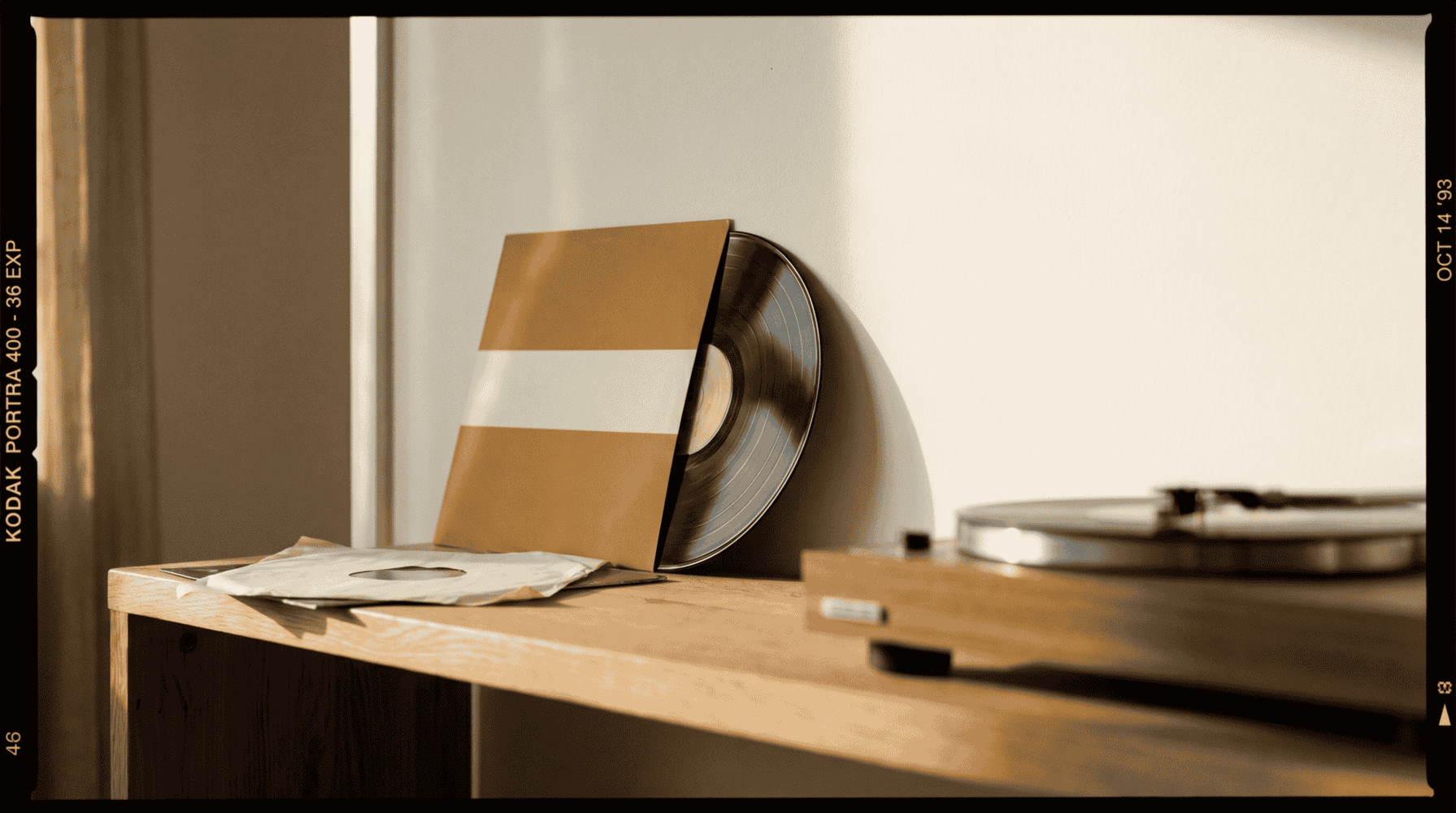
Reading the pattern requires separating two things that usually get conflated. The first is total music consumption, which is dominated by streaming and will continue to be — 837 million paid streaming subscribers globally, by the IFPI’s accounting, versus a vinyl market measured in tens of millions of units. The second is the structure of deliberate listening. A vinyl LP is not a convenient format. It requires equipment, physical space, a minimum of twenty minutes of attention per side, and a small ritual of removal, placement, and side-changing that no rational optimisation of convenience would preserve. People buy it anyway, and the number of people buying it grows every year, and the people who buy it are disproportionately younger than they were a decade ago.
What those listeners are buying is not just music. They are buying the one available framework under which the album still operates as a form — a sequenced, side-divided, physically present work with a cover one can hold and liner notes one can read. In an environment in which music as content is infinite, effectively free at the margin, and algorithmically arranged, the album as object has become the one place where the artist’s intended order still survives. That is a narrower function than the album used to have. It is not nothing.
WHAT SURVIVES, AND WHY IT MATTERS
The album as everyday form has been unbundled. What has survived, and in many respects grown, is the album as a considered object — the thing someone buys because they want to commit to this artist, this record, in a form that persists. Sales of this kind behave differently from streaming consumption. They concentrate around fewer records per year. They reward artists whose work merits the commitment. They skew older in catalogue and younger in buyer than the streaming distribution. They are, in a word, curated — by buyers, not by algorithms.
The cultural implication is specific. For sixty years, the album was the form in which popular music did its serious work — the form against which artists were assessed, the form in which critical judgement accumulated, the form under which a body of work cohered into something that could be remembered across decades. That load was too heavy for one cultural unit to carry, and it is not carrying it any more. But it has not dispersed into the stream either. It has concentrated into the physical album as an object bought deliberately, and into the smaller catalogue of records that reward that deliberation.
This is a narrower role than the album had at its commercial peak. It is also a more defensible one. The albums that get bought in physical form now are disproportionately those that hold together as works — that have the properties the form was built to support. Everything else gets streamed, and streaming is fine for everything else. The effect is a kind of quiet sorting. The album as background music, the album as containers for singles, the album as artefact of release scheduling — all of these have migrated into the flow. The album as a considered object, listened to in sequence, committed to, has not. It has become a smaller category, and a sharper one.
Whether this is enough for the form to survive the next fifty years is the open question. The physical-music market is still a small fraction of recorded-music revenue; the economics do not favour its expansion at the scale it once occupied. What the data show is not a comeback. It is a persistence, and a redefinition: the album as the narrower thing it has become. The cultural loss is real. The cultural residue — the part that has refused to be dissolved — is worth paying attention to. It is the part of the form that the streaming era has not been able to replicate, and, on the evidence, is not going to.
PRIMARY SOURCES
— International Federation of the Phonographic Industry. Global Music Report 2026. Published 18 March 2026. https://www.ifpi.org/global-music-report-2026-global-recorded-music-revenues-grow-6-4-as-record-companies-drive-innovation/
— IFPI. Global Music Report 2025. Published 19 March 2025. (Prior-year reference for decade-long trend data.) https://www.ifpi.org/ifpi-amidst-highly-competitive-market-global-recorded-music-revenues-grew-4-8-in-2024/
— Music Business Worldwide. ‘IFPI’s Global Music Report 2026: 10 quick (and crucial) takeaways.’ 18 March 2026. Industry analysis drawing directly on IFPI disclosed figures, including vinyl and physical-format growth data. https://www.musicbusinessworldwide.com/10-quick-and-crucial-takeaways-from-ifpis-global-music-report-2026/