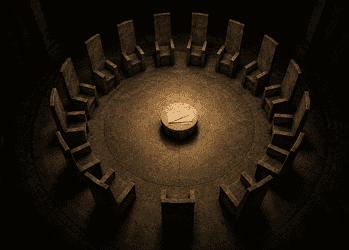


Boredom is not a problem to be solved. It is a cognitive state we are systematically destroying — and we won’t understand what we’ve lost until the capacity itself is gone.
In the summer of 2014, researchers at the University of Virginia asked participants to sit alone in a room for between six and fifteen minutes with nothing to do but think. No phones. No books. No music. Participants had the option, if they chose, to administer a mild electric shock to themselves.
Two-thirds of men and a quarter of women chose the shock.
The researchers, led by psychologist Timothy Wilson, concluded that people find it genuinely difficult to be alone with their thoughts — so difficult that many prefer physical discomfort to the experience of an unoccupied mind. The study was published in Science under the title ‘Just Think: The Challenges of the Disengaged Mind.’ It has been cited over 1,500 times.
What the study did not examine — could not examine in 2014, because the data wasn’t yet available — was what happens to a society that, across a decade, engineers away almost all of the conditions in which boredom naturally occurs.
THE BOREDOM ELIMINATION PROJECT
We did not intend to eliminate boredom. We intended to improve our commutes, our waiting rooms, our idle moments. The result, cumulatively, is the same.
The average adult in a high-income country now spends between four and seven hours per day looking at a smartphone screen, according to data from app analytics firm Data.ai. Every minute of that time is spent in a state that, whatever else it is, is not bored. Boredom — defined in the psychological literature as the aversive experience of wanting to engage in something satisfying but being unable to — requires an absence of stimulus. There is no absence of stimulus. The stimulus is constant, varied, algorithmically optimised for continued engagement, and available at every moment of potential idleness.
The queue at the pharmacy. The train platform. The ninety seconds in the elevator. The moment between waking and the first obligation of the day. These were once small pockets of unstructured cognitive time. They are now, in practice, extinct.
What looks like a productivity gain — never wasting a moment — may be something closer to the elimination of a cognitive state that was doing important work.
WHAT BOREDOM WAS ACTUALLY FOR
There is a growing body of cognitive science suggesting that boredom is not a malfunction but a signal — and a productive one.
A 2014 study by Sandi Mann and Rebekah Cadman at the University of Central Lancashire found that participants who completed a boring task before a creative exercise generated significantly more creative ideas than those who went straight to the creative task. Boredom, they concluded, appears to enhance what psychologists call ‘associative thinking’ — the ability to make unexpected connections between seemingly unrelated ideas.
Neuroscientific research on the default mode network (DMN) — a set of brain regions most active when the mind is not focused on external tasks — has reinforced this picture. The DMN is implicated in mind-wandering, future planning, self-referential thought, and the integration of new information with existing memory. It activates when we are, in the colloquial sense, doing nothing. A 2015 paper in PNAS found that DMN activity is associated with creative insight and the spontaneous generation of ideas.
The idle mind, it turns out, is not idle. It is processing, integrating, and occasionally producing the unexpected connection that constitutes what we call a good idea.
Newton under the apple tree. Archimedes in the bath. Kekulé dreaming of a snake eating its tail and waking with the structure of benzene. These are parables, perhaps, but they point to something real: the relationship between unoccupied time and genuine insight has a long and empirically supported history, even if we have been quietly eliminating the conditions for it.
THE ATTENTION ECONOMY’S COLLATERAL DAMAGE
The technology industry did not set out to destroy a cognitive state. It set out to maximise engagement — a metric that, for most platforms, correlates directly with revenue. The consequence, unintended but foreseeable, is a chronic occupation of the attentional field that leaves no room for the mind to wander.
Tristan Harris, the former design ethicist at Google who became the most prominent critic of attention-maximising design, has described this as ‘a race to the bottom of the brain stem.’ The most engaging content is not the most enriching content. It is the content most precisely calibrated to trigger dopaminergic response — novelty, outrage, social comparison, anticipation. The algorithm is not malicious. It is indifferent. It optimises for what keeps people looking, and boredom, by definition, does not keep people looking.
We have outsourced our unoccupied moments to platforms that profit from making sure those moments never actually arrive.
The long-term cognitive consequences of this are not yet established with the certainty that the psychological literature requires. The data is too recent, the effect sizes contested, the causal chains hard to isolate. What we have is a plausible hypothesis, a body of suggestive evidence, and a reasonable prior that cognitive states serving functions developed across millennia do not disappear without consequence.
THE CASE FOR UNOCCUPIED TIME
This is not a column about putting your phone down. That advice has been given, extensively and fruitlessly, for the better part of a decade.
It is a column about taking seriously the possibility that boredom is not a problem but a resource — one that the culture has been burning through at an unprecedented rate, and that will take deliberate effort to recover.
Some institutions have started. Several European primary schools have introduced ‘free play’ periods explicitly designed to be unstructured — no facilitated activities, no educational purpose, no outcome metrics. Early results suggest improvements in both creativity measures and emotional regulation. Some organisations have experimented with structured ‘thinking time’ — protected periods with no meetings, no communications, no deliverables — modelled loosely on 3M’s famous ‘15% time’ policy, which produced, among other things, Post-it Notes.
These are modest experiments. They are also swimming against a very strong current.
The average human in a wealthy country in 2026 is less bored than any human being who has ever lived. This is, depending on how you look at it, either a triumph or a warning. The mind that cannot tolerate its own company for fifteen minutes without reaching for a shock — or a scroll — is a mind that has lost access to one of its most important rooms.
The question is not whether we can afford to be bored. It is whether we can afford not to be.