
THE CONDITION
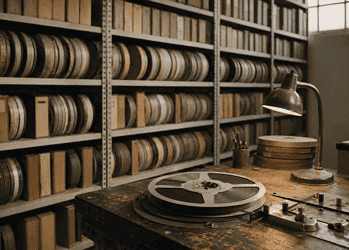
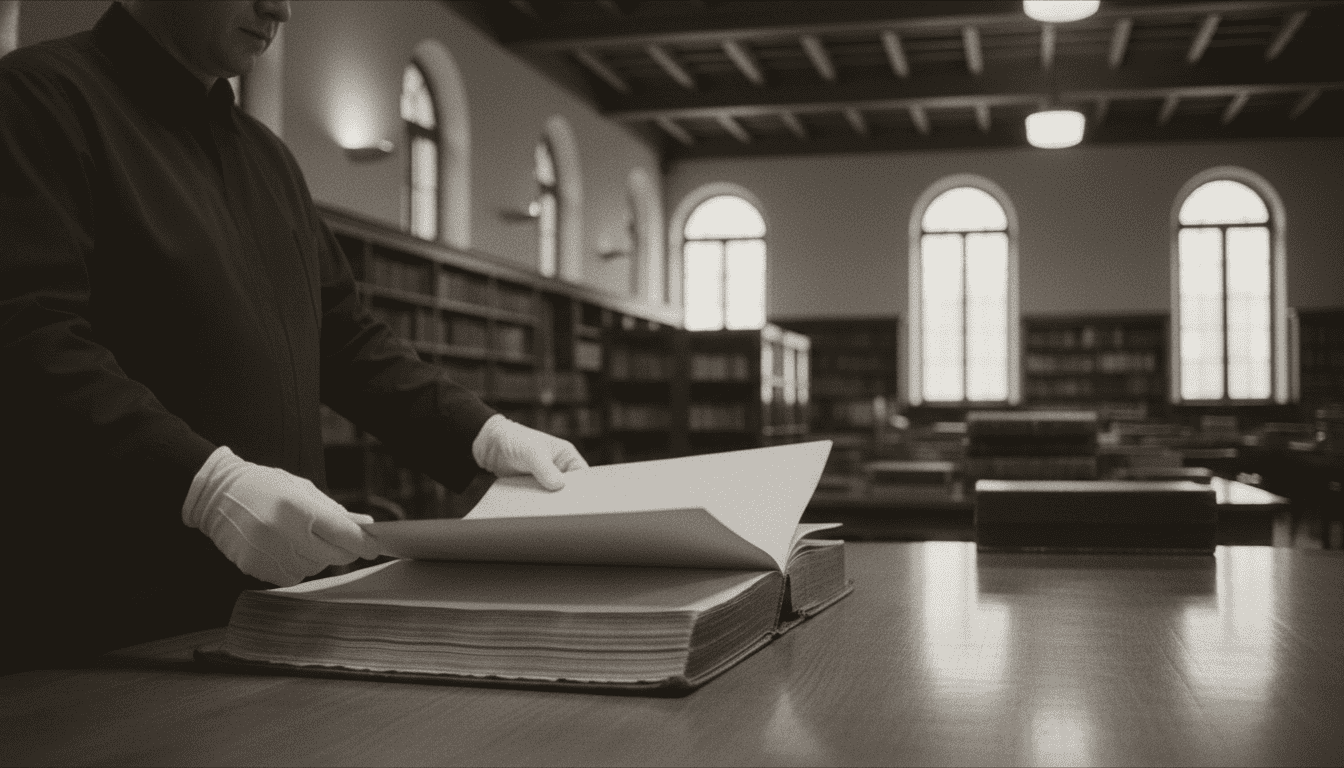
When the Bibliothèque nationale de France completed its mass digitisation programme — scanning millions of documents, photographs, maps, and manuscripts across its Gallica platform — it celebrated, rightly, an act of radical democratisation. Material that had once required a letter of introduction, a reserved reading room seat, and a set of cotton gloves was now accessible from a kitchen table in Lyon, Lagos, or Lahore. The archive had been opened.
What was less discussed, and remains largely undiscussed, is what the opening cost.
The question is not fidelity. Modern digitisation produces images of extraordinary resolution — sufficient, in many cases, to reveal detail invisible to the naked eye examining the original. The question is dimensionality. An archival photograph exists in three dimensions: it has a surface texture, a weight, a smell — the particular combination of paper substrate, silver compounds, and atmospheric deposition that a conservator can read like a medical chart. The photograph tells you what it depicts. The object tells you when, how, and under what conditions it survived.
Digital capture preserves one of these registers. The other, the object’s physical and chemical biography, is not transferred. It remains with the object, which recedes from access as its digital proxy moves forward into circulation.
What we have digitised is the content of memory. What we have not digitised — and cannot — is the materiality that gives memory its texture and its authority.
THE EPISTEMOLOGICAL STAKES
This would be an aesthetic concern if material culture were only about aesthetics. It is not. The physical properties of objects carry information that their digital representations do not. Radiocarbon dating requires physical matter. Ink composition analysis requires physical matter. The detection of forgery, restoration, and alteration — the authentication work on which art history, legal title, and scholarly attribution depend — requires physical matter.
A digital image can be forged with tools available to any moderately skilled graphic designer. A physical object’s ageing cannot, not without significant effort and expertise, and not in ways that are systematically undetectable. The shift from physical to digital as the primary access layer for cultural heritage is therefore not simply a change in convenience. It is a change in the evidentiary structure of cultural knowledge.
There is a related problem that sits further down the chain. When a digital file becomes the primary access point for an object, the object itself becomes secondary — curated less frequently, consulted less often, understood less completely by the institutions charged with its care. The expertise required to read physical objects — what a trained paper conservator knows about chain lines, watermarks, and degradation chemistry; what a photographic archivist knows about albumen, gelatin, and chromogenic processes — is expertise that requires sustained engagement with physical objects to maintain. When physical engagement declines, the knowledge declines with it.
Institutions have digitised their collections without, in most cases, a parallel programme for maintaining the tacit knowledge their collections require.
WHAT ENDURES
The impulse to digitise is not wrong. The error is the assumption that digitisation is preservation — that converting a physical object to a digital file is a form of safeguarding it. It is, more precisely, a form of copying it: one that extends access while leaving the original more vulnerable, not less.
The institutions best positioned to understand this are often the ones least resourced to address it. Major national libraries and archives have digitisation budgets and digital preservation strategies. They do not always have equivalent investment in the physical conservation expertise that gives their digital holdings meaning — the knowledge base that allows a researcher to understand what the scan is a scan of.
The library that doesn’t know it’s burning is not burning dramatically. It is losing something quieter: the capacity to understand what it holds. The digital catalogue expands while the ability to read the collection contracts. The archive is open. The expertise to interpret it is retiring, not being replaced, and not being replaced because the digital proxy has made the original seem less urgent.
What endures in a digitised archive is the image. What is lost, gradually and without announcement, is the knowledge of what the image means.